Sorting Waste Bins Set: A Comprehensive Overview
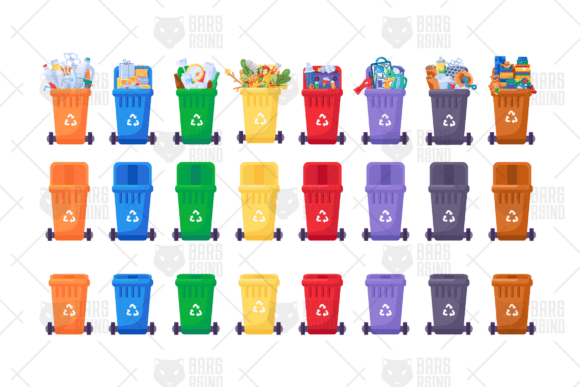
When it comes to managing household and industrial waste effectively, the Sorting Waste Bins Set stands out as a versatile and practical solution. This collection of containers, available in a variety of colors and styles, is specifically designed to help users separate different types of waste, including paper, plastic, metal, organic matter, textiles, hazardous materials, glass, and electronic waste. Whether for home use, office environments, or industrial settings, this set offers a structured approach to waste management that supports recycling efforts and promotes environmental responsibility.
Key Features of the Sorting Waste Bins Set
The Sorting Waste Bins Set is not just about color-coded bins—it's a comprehensive system that includes both open and closed containers, empty and filled bins, and clear recycling symbols. These elements work together to streamline the sorting process and make it easier for users to identify where specific waste types belong. The set also includes modern vector cartoon flat-colored illustrations, making it ideal for use in digital and print media, such as websites, banners, social media posts, posters, and educational materials.
One of the most notable aspects of this set is its adaptability. With 24 SVG, PNG, and JPG files, plus AI and EPS vector formats, it provides flexibility for designers and educators alike. The white background and clean design ensure that the visuals can be easily integrated into a wide range of projects without overwhelming the layout.
How It Compares to Other Waste Sorting Solutions
While there are many waste sorting systems on the market, the Sorting Waste Bins Set distinguishes itself through its visual clarity and scalability. Unlike basic plastic bins that lack clear labeling or symbolic representation, this set includes standardized icons and visual cues that align with global recycling practices. This makes it especially useful for multilingual environments or public spaces where visual communication is key.
Compared to physical bins alone, the digital illustration set offers a broader application. For example, educators and content creators can use the vector files to design infographics, instructional materials, or awareness campaigns. In contrast, traditional bins are limited to physical placement and signage, which may not always convey the same level of detail or consistency.
Strengths and Limitations
One of the primary strengths of the Sorting Waste Bins Set is its ability to support both practical waste separation and educational initiatives. The inclusion of eco-damage symbols and visual representations of polluted environments reinforces the importance of responsible waste disposal. Additionally, the variety of file formats allows for seamless integration into both print and digital platforms.
However, it's important to recognize that this set is primarily a visual tool rather than a physical waste management system. While it can guide behavior and enhance understanding, it does not replace the need for actual bins or waste collection infrastructure. Users looking for a complete physical solution will need to pair the illustrations with real-world containers and disposal systems.
Use Cases and Best-Fit Scenarios
The Sorting Waste Bins Set is particularly well-suited for environments where education and awareness play a central role. Schools, offices, community centers, and public spaces can benefit from using the illustrations to create informative signage or digital content that encourages proper waste sorting. It's also a valuable asset for designers working on sustainability-themed projects, such as websites, mobile apps, or eco-conscious branding materials.
For households or small businesses aiming to improve their recycling habits, the set can serve as a visual reference to help establish a more organized waste separation system. However, in industrial or large-scale waste processing facilities, more robust physical infrastructure and automated sorting systems may be necessary to handle high volumes of refuse efficiently.
Why Visual Clarity Matters in Waste Management
Clear communication is essential in waste management, especially when trying to encourage consistent and correct sorting behavior. The Sorting Waste Bins Set addresses this need by offering a standardized visual language that transcends language barriers. Whether used in a printed poster or a social media graphic, the flat-colored illustrations provide a clean, modern look that is both approachable and informative.
This visual consistency also supports long-term behavior change. When people encounter the same symbols and color codes across different environments—such as at home, in the office, or in public spaces—they are more likely to internalize the correct sorting practices. This kind of repetition and reinforcement is a key component of successful waste reduction strategies.
When to Consider Alternatives
While the Sorting Waste Bins Set offers many benefits, there are situations where alternative solutions may be more appropriate. For instance, in areas where waste collection systems are highly specialized or region-specific, local symbols and color codes may differ from those included in the set. In such cases, customization or the use of localized graphics may be necessary to ensure accuracy and user compliance.
Additionally, for users who require a physical sorting system rather than visual assets, purchasing actual bins with appropriate labels and compartments may be a better investment. The digital illustrations can still serve as a complementary resource, but they cannot replace the functionality of a real-world waste separation setup.
Design Flexibility and Practical Integration
One of the standout features of the Sorting Waste Bins Set is its design versatility. The flat-colored style ensures that the illustrations can be easily adapted to different design contexts without appearing outdated or overly stylized. Designers can scale the vector files to any size without loss of quality, making them suitable for everything from mobile app icons to large-format posters.
The availability of multiple file formats also enhances usability. SVG files are ideal for responsive web design, while PNG and JPG formats are well-suited for social media and print. The inclusion of AI and EPS files gives professionals the ability to modify and customize the illustrations to match specific branding or design requirements.
Making the Right Choice for Your Needs
Deciding whether the Sorting Waste Bins Set is the right choice depends on your specific goals and environment. If you're looking for a visual resource to support recycling education, digital content creation, or environmental awareness campaigns, this set offers a comprehensive and adaptable solution. Its modern design and compatibility with various platforms make it a valuable tool for designers, educators, and sustainability advocates alike.
However, if your primary need is a physical waste sorting system for a home, office, or industrial setting, you may need to look beyond the illustrations and invest in actual bins that are appropriately labeled and accessible. In those cases, the Sorting Waste Bins Set can still serve as a complementary visual guide to reinforce proper sorting practices and improve overall user engagement.